
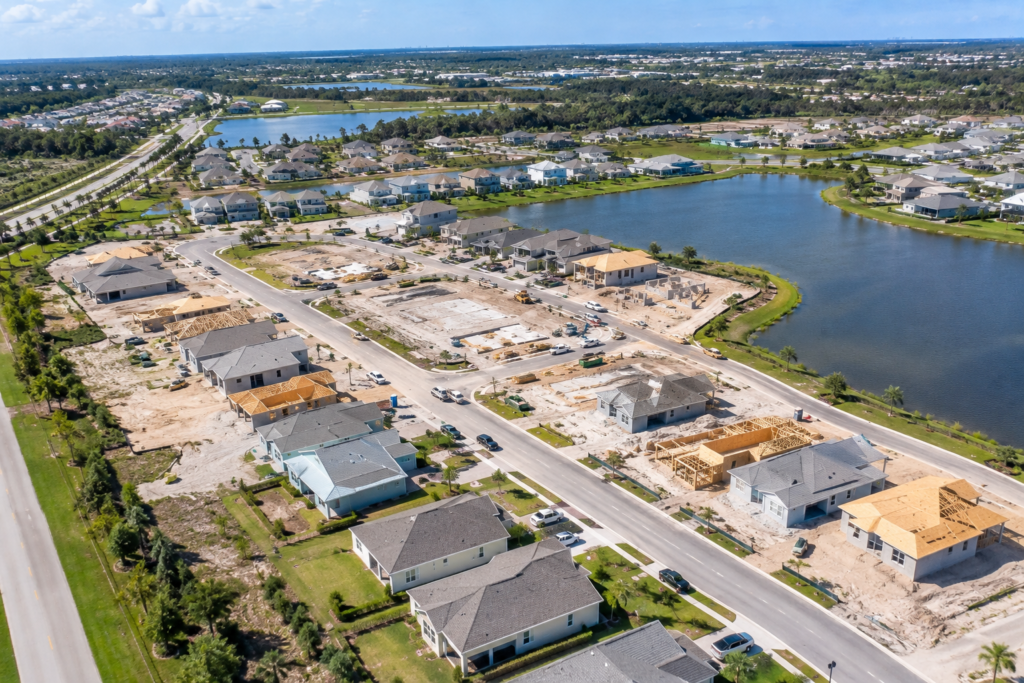
A lot of what is for sale on the Emerald Coast has not been built yet. U.S. Census building permit data shows local governments authorized about 2,400 new housing units in Walton County in 2025, about 2,100 in Bay County, about 1,900 in Santa Rosa County, about 1,400 in Escambia County and about 1,100 in Okaloosa County. Those counts include every type of housing, from single-family homes to apartment buildings.
Buying new is a different process from buying a resale home. The contract is different, the deposit rules are different, and the protections come from different places. This is the deeper look we promised in our Buyer’s Guide to the Florida Panhandle.
The builder’s contract is the builder’s contract
On a resale home in Florida, buyers and sellers usually sign a standard form contract. Builders commonly use their own, written by their own lawyers. That is not unusual or improper, but it means the terms are not the ones you may have seen before, and they are written to protect the builder.
Read it slowly. The parts that matter most are usually these:
- Completion date. Is there a firm date, an estimate, or no date at all? What happens if the builder is late, and what happens if you cannot close when the home is done?
- Price changes. Can the price rise for materials or labor before closing?
- Selections and change orders. What are the deadlines for choosing finishes, and what does a change cost after that?
- Substitutions. Can the builder swap materials or features for ones it considers equal?
- Disputes. Does the contract require arbitration instead of court?
- Your agent. Many builders require a buyer’s agent to be registered on the first visit to the community. If you want representation, bring your agent from the start.
Where your deposit sits
Florida law gives new-construction buyers specific protection for deposits, and it depends on what you are buying.
A house or duplex. Under Florida Statutes section 501.1375, you have the right to have your deposits, up to 10 percent of the price, held in an escrow account. The contract must say so in capital letters. You can waive that right, but only in writing, so read anything you sign about the deposit carefully. A builder can use escrowed deposit money for construction only if it posts a surety bond payable to you or meets certain loan conditions. The rule does not apply to builders who build fewer than ten homes a year.
A condominium from a developer. Under section 718.202, deposits up to 10 percent of the price must be held by an independent escrow agent. Money you pay above 10 percent may be used for construction costs, but only if the contract says so in a specific bold notice, and only once construction has started. It cannot be spent on marketing or sales commissions.
If a contract asks for a large deposit, ask where the money goes and read the matching paragraph in the contract.
Your right to walk away
- Condominium from a developer. Section 718.503 gives you 15 days to cancel after signing and receiving all of the required documents, including the declaration, bylaws, budget, and plot and floor plans. That right cannot be waived. It ends at closing.
- Homeowners association. If the community has a mandatory HOA, section 720.401 requires a disclosure summary before you sign. If you get it late, you can cancel within three days of receiving it or before closing, whichever comes first.
- Community Development District. Some newer communities sit inside a CDD, a special district that can levy its own assessments to pay for roads, drainage and other infrastructure. Those assessments show up on your property tax bill in addition to county taxes. Section 190.048 requires the first sale contract to disclose this in bold type above your signature. Ask what the annual assessment is and how many years it runs.
What the warranty actually covers
Florida has no general statute that gives a new single-family home a warranty. Protection comes from three places: the builder’s written warranty, warranties that Florida courts have recognized for new homes, and the defect claims described below. A builder can limit those court-recognized warranties, but only with a specific, conspicuous written disclaimer, so look for one in your contract. Florida law also excludes “offsite improvements,” such as streets, drainage and utility lines, from those implied warranties.
Many builders offer a written warranty following a common “1-2-10” structure: one year on workmanship and materials, two years on plumbing, electrical and mechanical systems, and ten years on major structural defects. The structural coverage is usually defined narrowly, often limited to damage to load-bearing parts of the home that makes it unsafe or unlivable. Read the definitions, not just the headline years.
Condominiums are different. Section 718.203 gives condo buyers statutory warranties from the developer: three years on the unit and on common elements, and on the roof, structure and building systems either three years from completion or one year after owners take control of the association, whichever is later, up to five years.
If something goes wrong
Before you can sue a builder over a construction defect in Florida, Chapter 558 requires written notice at least 60 days before filing. The builder then has 30 days to inspect and 45 days to respond with an offer to repair, pay, do both, or dispute the claim. Your contract must mention this process.
The deadline to bring a claim changed in 2023. Florida’s statute of repose for construction is now seven years, down from ten, and the clock generally starts when the certificate of occupancy or certificate of completion is issued, not when you move in. Keep your closing documents and any warranty correspondence together, and report problems in writing as soon as you find them.
Inspections on a new home
A new home is inspected for building code compliance by the county or city building department, or by a licensed private provider the builder hires, which Florida law allows. Those inspections check that the home meets code minimums. They are not a review of workmanship or finishes.
Many buyers hire their own inspector for a pre-drywall inspection, while the framing, wiring and plumbing are still visible, and again before closing. Whether you can, and on what notice, depends on your contract. Check it before you sign rather than after the drywall goes up.
Taxes, flood and insurance on a new build
- Your first tax bill may be low. Florida values property as of January 1. A home that is not substantially complete on that date is taxed only on the land, or partly, for that year. The full value appears on the next bill. Budget for the full amount, not the first one. File for homestead by March 1 if the home is your primary residence.
- Elevation. Ask for the final FEMA elevation certificate. In Walton County, for example, the county requires elevation certificates at three stages of construction, and in AE flood zones the living floor must sit at least one foot above base flood elevation. That certificate drives your flood insurance cost.
- Wind. Along much of this coast, homes are built to wind-borne debris standards under the Florida Building Code. Florida law requires insurers to give premium credits for qualifying wind-resistant construction. A wind mitigation inspection documents those features for your insurer, so ask for one on a new home too.
- Flood insurance and Citizens. If you insure wind through Citizens Property Insurance, flood coverage is already required for homes in FEMA flood zones and for higher-value homes outside them. Starting January 1, 2027, Citizens requires it on all of its policies that include wind coverage, regardless of zone.
Questions to ask before you sign
- Is my deposit going into escrow, and am I being asked to waive that?
- What is the completion date, and what happens if it slips?
- Who provides the warranty, what does each part cover, and does it transfer to a future buyer?
- Can I bring my own inspector before drywall and before closing?
- Is this community in a CDD? What is the annual assessment and for how long?
- What are the HOA dues and reserves, and is the community fully built out or are there phases to come?
- What flood zone is the lot in, and what elevation will the finished floor be?
Little Ranch Realty works across the Florida Panhandle at every price point, from a first home in a new subdivision to a custom build on a single lot. If you are looking at a new community or a builder contract and want a second set of eyes on it, we are happy to go through it with you.